
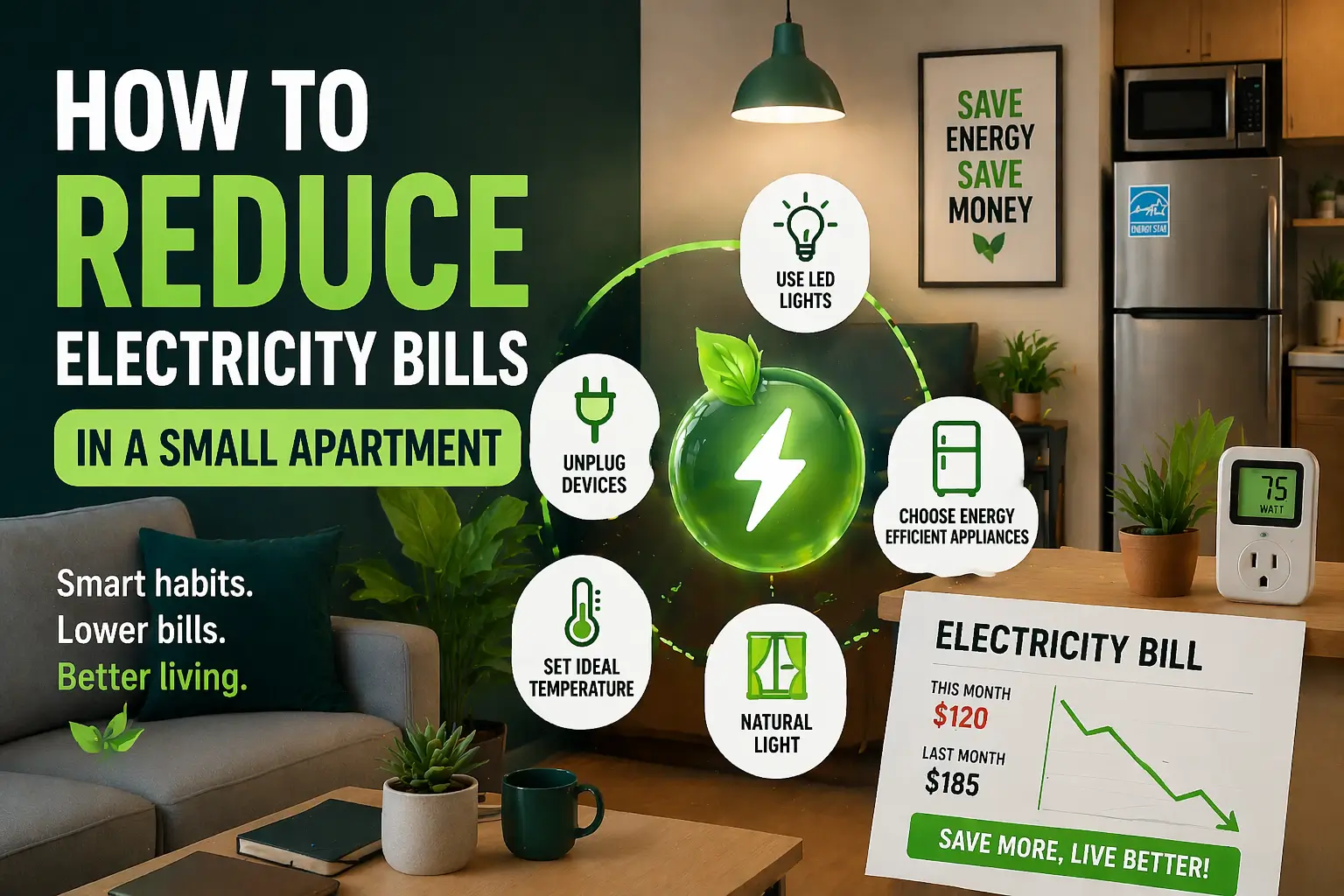
Living in a small apartment should mean lower electricity bills—but for many people, that’s not what happens. Even with limited space, energy costs can add up quickly due to everyday habits, inefficient appliance use, and small mistakes that go unnoticed.
If you’ve ever been surprised by your monthly bill, you’re not alone. The good news is that reducing electricity consumption doesn’t require drastic changes. In most cases, it comes down to understanding where energy is being wasted and making a few practical adjustments.
Where Most Electricity Is Actually Used
In small apartments, energy consumption is usually concentrated in a few key areas. The main ones are:
- Refrigerator (running all day)
- Air conditioner or fan
- Lighting
- Electronics in standby mode
For example, even though your apartment is small, a refrigerator that runs inefficiently can consume more energy than expected over a month. The same applies to air conditioning used without proper settings.
Understanding this helps you focus on what really matters instead of trying to “save energy” in ways that don’t make much difference.
Simple Changes That Make a Real Difference
You don’t need to overhaul your entire lifestyle to start saving electricity. Some small changes can have a noticeable impact:
- Turn off lights when leaving a room
- Unplug chargers when not in use
- Avoid opening the refrigerator repeatedly
- Use appliances only when necessary
In practice, these adjustments reduce what’s called “wasted energy”—electricity that is being used without providing any real benefit.
For example, leaving devices plugged in all day might seem harmless, but over time, it adds up.
How to Use Your Refrigerator More Efficiently
Your refrigerator is one of the few appliances that never stops working, which makes it one of the biggest contributors to your electricity bill.
Here are a few practical ways to improve its efficiency:
- Keep it away from heat sources like stoves or direct sunlight
- Avoid placing hot food inside
- Make sure the door seals properly
- Organize items to reduce the time the door stays open
A simple habit like checking the door seal can make a difference. If cold air escapes, the fridge has to work harder, which increases energy consumption.
Lighting: Small Changes, Long-Term Savings
Lighting may not seem like a major factor, but in a small apartment, inefficient lighting can still affect your bill over time.
Switching to LED bulbs is one of the easiest improvements you can make. They consume less energy and last longer than traditional bulbs.
You can also:
- Use natural light during the day
- Avoid turning on multiple lights unnecessarily
- Focus lighting only where needed
These changes are simple but effective when practiced consistently.
Air Conditioning and Fans: Using Them the Right Way
Cooling systems can quickly become the biggest energy expense if used without strategy.
If you use air conditioning:
- Set the temperature between 23°C and 25°C
- Keep doors and windows closed
- Clean filters regularly
If you use a fan:
- Position it to improve air circulation
- Combine it with natural ventilation when possible
In many cases, using a fan instead of air conditioning—even for part of the day—can significantly reduce energy consumption.
Practical Checklist to Reduce Your Bill
Here’s a simple checklist you can start applying today:
- Turn off lights when leaving rooms
- Unplug devices not in use
- Use LED bulbs
- Avoid opening the fridge too often
- Set air conditioning to moderate temperatures
- Use appliances with full loads (washing machine, iron, etc.)
You don’t need to do everything at once. Even applying a few of these consistently can lead to noticeable savings.
Common Mistakes That Increase Electricity Bills
Many people unknowingly increase their energy consumption through small but frequent mistakes:
- Leaving appliances on standby all day
- Using air conditioning at very low temperatures
- Opening the refrigerator too often
- Using multiple high-power appliances at the same time
These habits may seem minor individually, but together they can significantly increase your monthly bill.
Signs You Are Wasting Electricity Without Noticing
Sometimes the problem isn’t obvious. Here are a few signs that you might be using more electricity than necessary:
- Your bill increases without a clear reason
- Appliances feel warm even when not in use
- You keep devices plugged in all the time
- Lights stay on in empty rooms
If you notice any of these, it’s a good idea to review your habits and identify where energy is being wasted.
FAQ
Does a small apartment really save electricity?
Not automatically. While smaller spaces tend to use less energy, inefficient habits can still lead to high electricity bills.
Is it worth unplugging devices every day?
Yes. Devices in standby mode still consume energy, and unplugging them can reduce unnecessary usage over time.
What uses the most electricity in a small apartment?
Typically, refrigerators and air conditioning systems are the biggest contributors.
Do LED bulbs really make a difference?
Yes. They use significantly less energy and last longer, making them a cost-effective choice.
Final Thoughts
Reducing your electricity bill in a small apartment is less about big changes and more about consistency.
By paying attention to how you use appliances, adjusting small daily habits, and avoiding common mistakes, you can gradually lower your energy costs without sacrificing comfort.
Start with a few simple adjustments, and over time, those small changes will lead to real savings.