
Many people move into a small apartment expecting lower electricity bills. After all, less space should mean less energy use, right?
But after the first or second bill arrives, reality hits. The cost is often higher than expected, and it’s not always clear why. The truth is, even in small spaces, a few key appliances and habits can drive most of your electricity consumption.
Understanding where your energy actually goes is the first step to reducing your bill in a meaningful way.
The Biggest Energy Consumers in Small Apartments
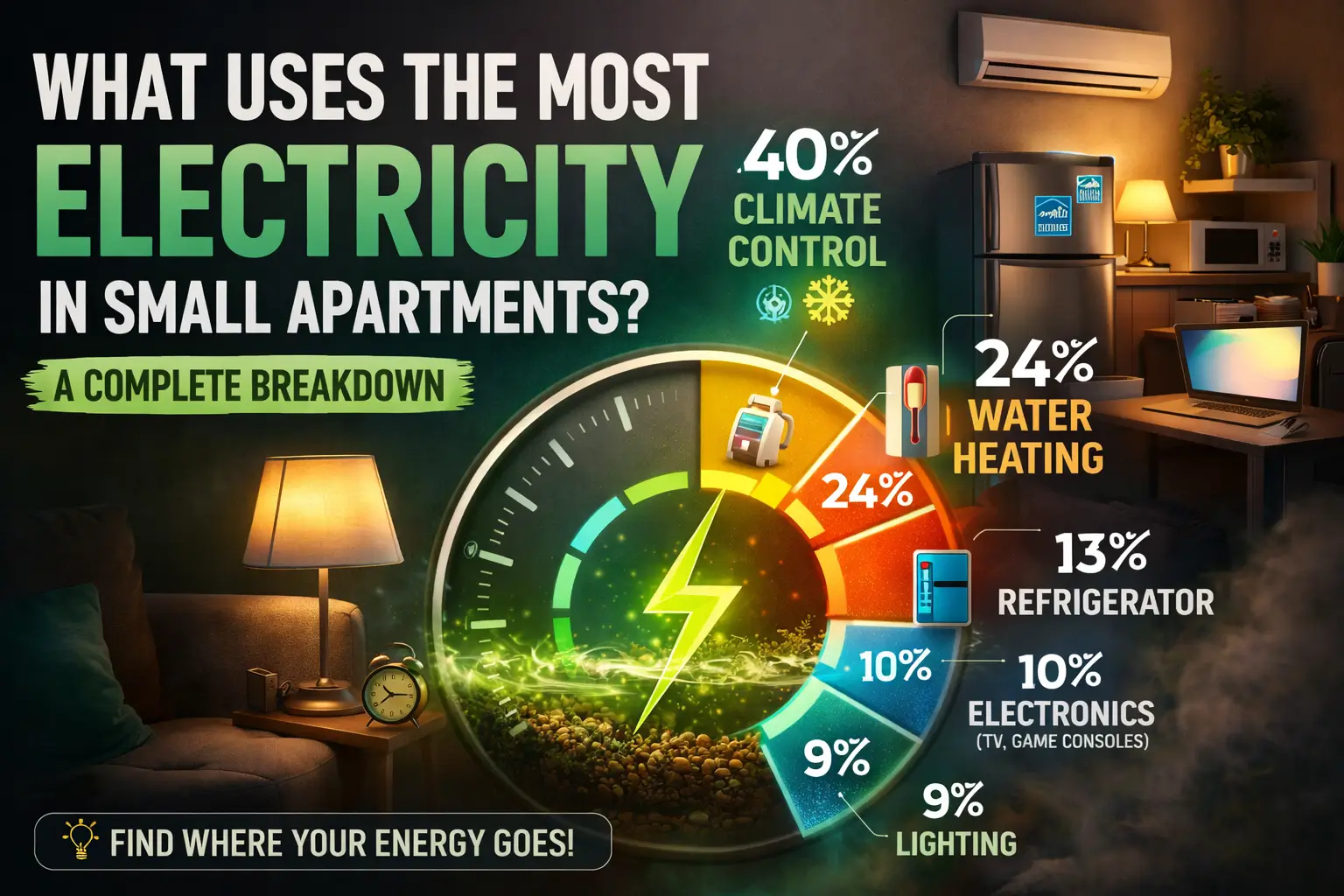
In most small apartments, electricity usage is not evenly distributed. A few appliances are responsible for the majority of consumption.
The main ones are:
- Refrigerator
- Air conditioner or fan
- Electric shower (in some regions)
- Lighting
- Devices in standby mode
For example, your refrigerator runs 24 hours a day. Even if it seems efficient, it continuously consumes energy, making it one of the top contributors every month.
Air conditioning, on the other hand, may not run all day—but when it does, it uses a large amount of power in a short time.
Why Refrigerators Consume So Much Energy
Refrigerators are often overlooked because they’re considered “normal” appliances. But their constant operation makes them one of the biggest energy users.
This happens because:
- They cycle on and off all day to maintain temperature
- Poor insulation or old seals force them to work harder
- Frequent door opening increases internal temperature
In practice, a well-maintained refrigerator will use less energy than one with worn-out seals or poor organization.
For instance, if you frequently leave the door open while deciding what to eat, the appliance needs to use extra power to cool down again.
Air Conditioning vs Fan: A Clear Difference
Cooling is another major factor, especially in warmer climates.
Air conditioners consume significantly more electricity than fans. This is because they actively cool the air, while fans only circulate it.
Here’s a simple comparison:
- Air conditioner → high consumption, strong cooling
- Fan → low consumption, moderate comfort
A real-life example: using an air conditioner for 6 hours every night can noticeably increase your monthly bill. Replacing part of that time with a fan can reduce costs without sacrificing too much comfort.
Lighting: Small but Consistent Impact
Lighting doesn’t usually consume as much as large appliances, but it still plays a role—especially if used inefficiently.
Traditional bulbs use more energy and generate heat. LED bulbs, on the other hand, are far more efficient.
The impact becomes clearer over time. For example, keeping multiple lights on every evening adds up over a month, even in a small apartment.
Switching to LEDs and using lighting only when needed can make a steady difference.
Standby Power: The Hidden Consumption
One of the most underestimated sources of energy usage is standby power.
This happens when devices are plugged in but not actively being used.
Common examples include:
- TVs
- Microwaves
- Phone chargers
- Laptops
Individually, they don’t use much electricity. But together, over days and weeks, the consumption becomes noticeable.
This is one of those areas where small changes can lead to consistent savings.
Practical Checklist to Identify High Energy Use
If you’re not sure where your electricity is going, start with this checklist:
- Check which appliances run continuously (like your fridge)
- Notice how often you use air conditioning
- Look for devices that stay plugged in all day
- Observe your lighting habits at night
- Review your electricity bill for unusual increases
This simple review often reveals patterns that are easy to fix.
Common Mistakes That Increase Electricity Bills
Many people increase their energy usage without realizing it.
Some common mistakes include:
- Setting air conditioning to very low temperatures
- Leaving appliances on standby all the time
- Opening the refrigerator too frequently
- Using multiple high-power devices at once
These actions may seem small, but they create unnecessary energy demand.
For example, lowering your air conditioner temperature from 24°C to 18°C doesn’t cool the room faster—it only makes the system work harder for longer.
Signs You Are Wasting Electricity Without Noticing
Sometimes, the issue isn’t obvious. But there are signs that indicate inefficient energy use:
- Your electricity bill increases without a clear reason
- Appliances feel warm even when turned off
- You leave chargers plugged in all day
- Lights stay on in rooms you’re not using
These patterns suggest that energy is being used without purpose.
Recognizing these signs is the first step toward correcting them.
FAQ
What appliance uses the most electricity in a small apartment?
In most cases, the refrigerator uses the most electricity because it runs continuously.
Does unplugging devices really help?
Yes. Devices in standby mode still consume power, and unplugging them reduces unnecessary usage.
Is air conditioning always expensive?
It depends on how it’s used. Efficient settings and limited usage can reduce its impact.
Are LED bulbs worth it?
Yes. They consume less energy and last longer, making them a practical choice for long-term savings.
Final Thoughts
In a small apartment, electricity usage is less about space and more about behavior.
A few key appliances—like refrigerators and air conditioners—are responsible for most of the consumption. On top of that, small daily habits can either increase or reduce your energy use over time.
By understanding where electricity is being used and making simple adjustments, you can take control of your bill without making drastic changes to your lifestyle.
Start by observing your habits. From there, even small improvements can lead to noticeable savings.