
It’s a hot evening. You’re in your apartment trying to cool down, and you have two options: turn on the fan or switch on the air conditioner.
The fan feels cheaper, but the air conditioner cools faster. So which one actually uses less electricity?
This is a common question, especially in small apartments where energy consumption needs to stay under control. The answer isn’t just about which device is “better”—it’s about how each one works and how you use it.
How Fans and Air Conditioners Work Differently
To understand energy consumption, you need to understand what each device actually does.
A fan doesn’t cool the air. It simply moves it around. This creates a cooling sensation on your skin, but the room temperature stays the same.
An air conditioner, on the other hand, actively removes heat from the air and lowers the room temperature.
Because of this difference:
- Fans use much less electricity
- Air conditioners provide stronger cooling
The trade-off is between energy efficiency and cooling power.
How Much Electricity Does Each One Use?
In general terms:
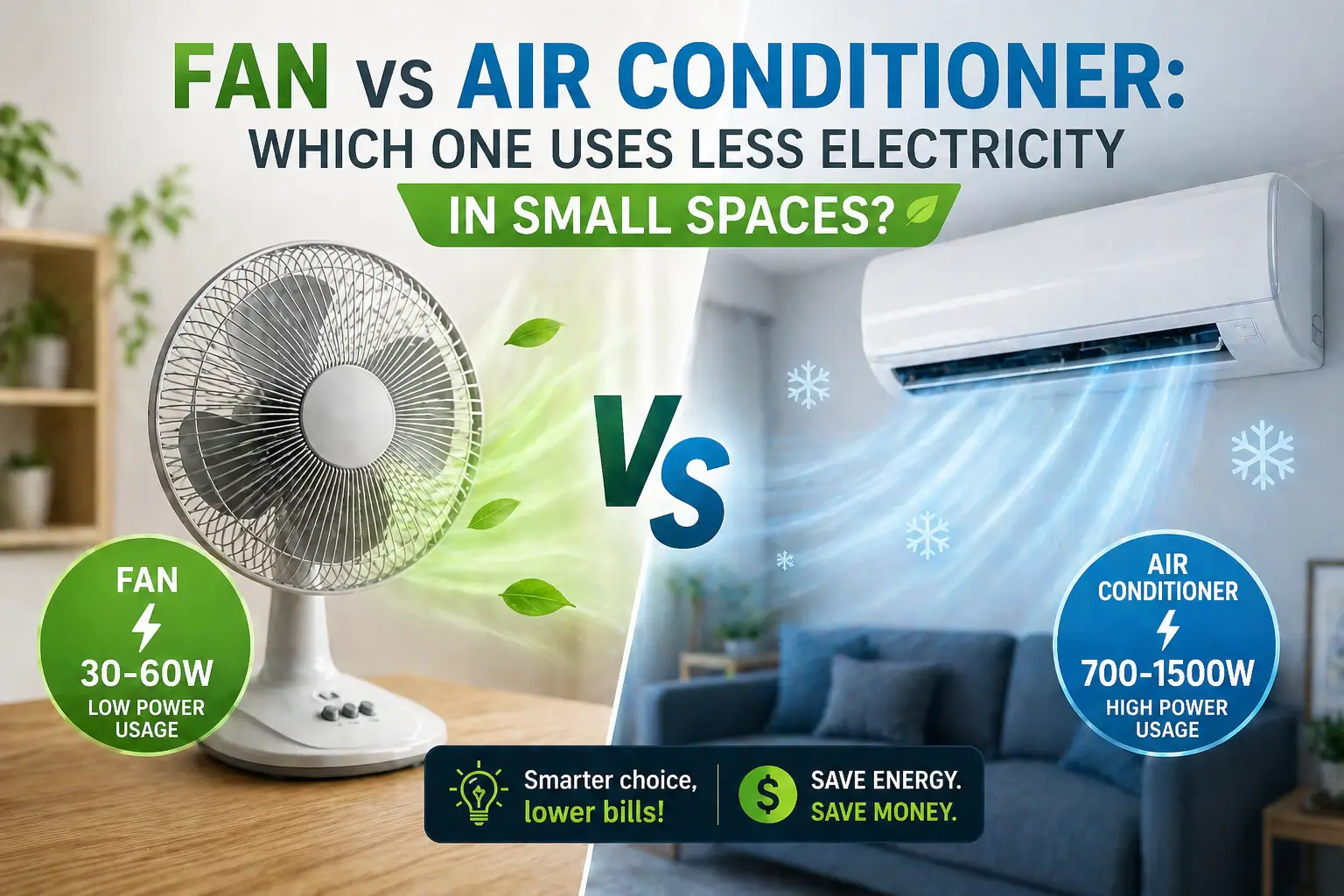
- A fan uses around 30 to 70 watts
- An air conditioner can use 900 to 2000 watts or more
This is a significant difference.
For example, running a fan for several hours a day will have a minimal impact on your electricity bill. Running an air conditioner for the same amount of time can increase it noticeably.
But usage patterns matter just as much as the numbers.
Real-Life Example: Daily Use Comparison
Imagine two scenarios in a small apartment:
Scenario A (Fan):
- Used for 6 hours per day
- Low energy consumption
- Moderate comfort
Scenario B (Air Conditioner):
- Used for 6 hours per day
- High energy consumption
- Strong cooling
Over a month, the second scenario will clearly result in a higher electricity bill.
However, comfort also plays a role. In very hot environments, a fan alone may not be enough.
When a Fan Is the Better Choice
A fan is usually the better option when:
- The temperature is warm but not extreme
- You just need air circulation
- You want to reduce electricity costs
In practice, using a fan during the evening or at night can provide enough comfort without increasing your bill significantly.
It’s also useful for small rooms where airflow can be more effective.
When Air Conditioning Becomes Necessary
There are situations where a fan simply isn’t enough.
Air conditioning is more suitable when:
- The temperature is very high
- Humidity is high
- You need consistent cooling
In these cases, the higher energy use may be justified for comfort.
But how you use it makes a big difference.
How to Use Both More Efficiently
You don’t have to choose only one.
A common strategy is to combine both:
- Use the air conditioner to cool the room initially
- Switch to a fan to maintain comfort
This works because once the room is cooler, maintaining that temperature requires less energy.
For example, instead of running the air conditioner all night, you can use it for a shorter period and then rely on a fan.
Practical Checklist to Reduce Cooling Costs
Here’s a simple checklist to keep your electricity bill under control:
- Use a fan whenever possible
- Limit air conditioner usage time
- Keep doors and windows closed when cooling
- Clean air conditioner filters regularly
- Avoid setting very low temperatures
- Combine fan and air conditioner use
These steps reduce unnecessary energy consumption without sacrificing comfort.
Common Mistakes That Increase Electricity Bills
Cooling systems are often used inefficiently due to small mistakes:
- Leaving the air conditioner running in empty rooms
- Setting the temperature too low
- Using air conditioning when a fan would be enough
- Keeping doors or windows open while cooling
For example, setting the air conditioner to 18°C doesn’t cool the room faster—it just makes the system work harder for longer.
Signs You Are Wasting Electricity Without Noticing
You may be using more energy than necessary if:
- Your electricity bill increases during warmer months
- The air conditioner runs for long periods without stopping
- Rooms are cooled even when not in use
- You rely only on air conditioning
These signs indicate inefficient usage rather than a problem with the device itself.
Simple Comparison: Cost vs Comfort
Fan:
- Low electricity use
- Lower cost
- Moderate cooling
Air Conditioner:
- High electricity use
- Higher cost
- Strong cooling
The best choice depends on your situation.
In many cases, combining both gives you the best balance between comfort and efficiency.
FAQ
Does a fan always use less electricity than an air conditioner?
Yes. Fans consume significantly less energy because they don’t actively cool the air.
Is it cheaper to use a fan all night?
Yes. Even long usage has a minimal impact compared to air conditioning.
Can I reduce air conditioner costs?
Yes. Limiting usage time and combining it with a fan helps reduce consumption.
What is the best temperature for efficiency?
Around 23°C to 25°C is generally more efficient and comfortable.
Final Thoughts
In small apartments, every energy decision matters. Choosing between a fan and an air conditioner isn’t just about comfort—it’s about how much you’re willing to spend on electricity.
Fans are clearly more efficient when it comes to energy use. Air conditioners provide stronger cooling but at a higher cost.
The most practical approach is not choosing one over the other, but using both intelligently.
By understanding how each device works and adjusting your habits, you can stay comfortable while keeping your electricity bill under control.