
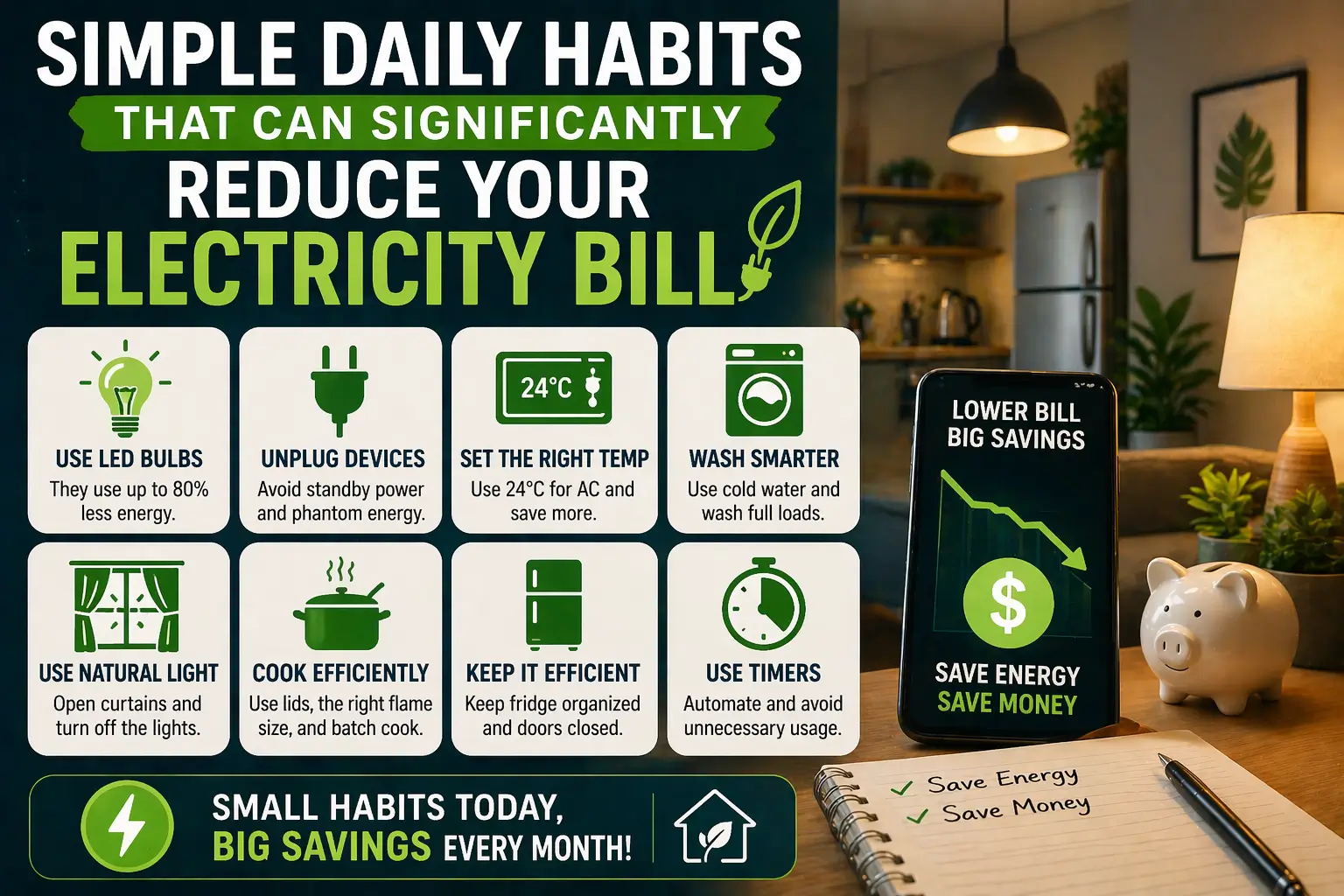
You don’t buy new appliances. You don’t change your entire routine. Yet somehow, your electricity bill keeps creeping up.
This happens more often than people expect—especially in small apartments. The issue usually isn’t one big mistake, but a collection of small daily habits that quietly increase energy use.
The good part? Those same habits can be adjusted. And when they are, the results start to show over time.
Why Daily Habits Matter More Than You Think
It’s easy to focus on big appliances when thinking about electricity. Refrigerators, air conditioners, washing machines—they all matter.
But daily habits are what determine how often and how efficiently those appliances are used.
For example, using a washing machine twice with small loads instead of once with a full load doubles the energy used for the same task.
The appliance didn’t change—the habit did.
Using Appliances More Intentionally
One of the simplest ways to reduce electricity usage is to be more intentional with how and when you use appliances.
This includes:
- Running the washing machine only when it’s full
- Avoiding unnecessary use of high-power devices
- Turning appliances off completely after use
In practice, this doesn’t feel like a big change. But over days and weeks, it reduces repeated energy use.
For instance, using an iron once for multiple clothes instead of turning it on several times a week makes a noticeable difference over time.
Lighting Habits That Affect Your Bill
Lighting is one of the easiest areas to improve because it’s directly tied to behavior.
Simple adjustments include:
- Turning off lights when leaving a room
- Using natural light during the day
- Avoiding lighting areas that are not in use
A common situation: leaving the kitchen light on while spending time in another room. It doesn’t seem important in the moment, but repeated daily, it adds up.
Managing Cooling and Airflow
Cooling systems can quickly increase your electricity bill, especially when used without awareness.
Better habits include:
- Using a fan when possible instead of air conditioning
- Closing doors and windows when cooling a room
- Turning off cooling systems when leaving
For example, running an air conditioner in an empty room is one of the easiest ways to waste energy.
Even reducing usage by one hour per day can make a difference over a month.
Reducing Standby Energy in Daily Life
Standby power is often ignored because it’s not visible.
Daily habits that help reduce it include:
- Unplugging chargers when not in use
- Turning off power strips at night
- Avoiding leaving electronics connected all day
In practice, this is about awareness. Once you start noticing what stays plugged in, it becomes easier to control.
Practical Checklist You Can Start Today
If you want a simple way to apply everything, start here:
- Turn off lights when leaving rooms
- Use appliances only when necessary
- Avoid small, repeated usage of high-power devices
- Unplug unused electronics
- Use natural light whenever possible
- Combine tasks (laundry, ironing, etc.)
You don’t need to apply everything perfectly. Consistency matters more than perfection.
Real-Life Example: Small Changes, Real Impact
Imagine two people living in similar apartments.
Person A:
- Turns off lights regularly
- Uses appliances efficiently
- Unplugs unused devices
Person B:
- Leaves lights on
- Uses appliances without planning
- Keeps devices plugged in all day
After a month, Person A will likely have a lower electricity bill—not because of different appliances, but because of daily habits.
This is where small actions turn into measurable results.
Common Mistakes That Increase Electricity Bills
Some habits increase energy use without being obvious:
- Using appliances multiple times for small tasks
- Leaving lights on in unused rooms
- Running cooling systems longer than needed
- Ignoring standby power
These behaviors don’t seem significant individually. But together, they create a pattern of unnecessary consumption.
Signs You Are Wasting Electricity Without Noticing
You might be using more energy than necessary if:
- Your bill doesn’t decrease even after trying to save
- You often leave devices on without thinking
- Lights are frequently left on
- You use appliances without planning
These signs usually point to habits rather than equipment.
Before vs After: A Simple Comparison
Before:
- Lights left on
- Appliances used without planning
- Devices always plugged in
After:
- Lights turned off when not needed
- Appliances used efficiently
- Devices unplugged or controlled
The difference isn’t dramatic in one day. But over time, it becomes clear.
FAQ
Can small habits really reduce electricity bills?
Yes. Small changes, when repeated daily, have a cumulative effect that becomes noticeable over time.
Do I need to change all my habits at once?
No. Start with a few and build consistency gradually.
Is unplugging devices worth it?
Yes. It reduces standby energy, which contributes to unnecessary consumption.
What is the easiest habit to start with?
Turning off lights when leaving a room is one of the simplest and most effective.
Final Thoughts
Reducing your electricity bill in a small apartment doesn’t require major changes. It comes down to awareness and consistency.
Daily habits shape how energy is used. When those habits improve, energy waste decreases naturally.
Start small. Pay attention to how you use your space. Over time, those small adjustments become part of your routine—and your electricity bill reflects it.