
You turn on the air conditioner to escape the heat, and within minutes, the room feels comfortable. But at the end of the month, your electricity bill tells a different story.
This is a common situation in small apartments. Air conditioning works fast and feels necessary—but it can also become the biggest contributor to your energy costs if used without attention.
The good news is that you don’t need to stop using it. You just need to use it more efficiently.
Why Air Conditioning Uses So Much Electricity
Air conditioners consume a lot of energy because they actively remove heat from the air. Unlike a fan, which simply moves air around, an AC unit changes the temperature of the entire room.
This process requires:
- A compressor running continuously
- Heat exchange with the outside environment
- Constant energy to maintain temperature
In practice, the lower the temperature you set, the harder the system works.
For example, setting your AC to 18°C doesn’t cool the room instantly—it just forces the unit to run longer and use more electricity.
Choosing the Right Temperature Setting
One of the simplest ways to reduce energy consumption is adjusting the temperature.
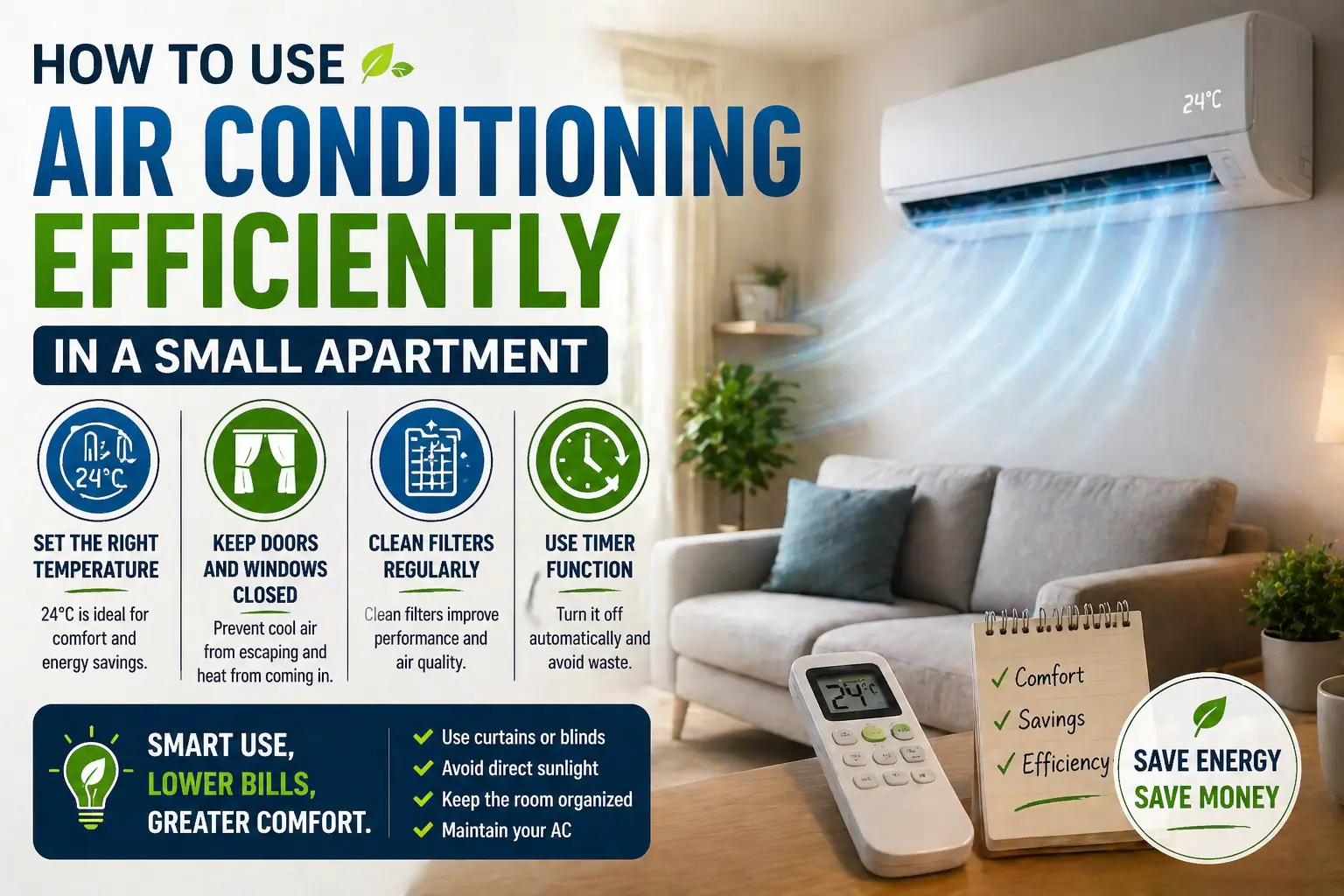
A range between 23°C and 25°C is usually more efficient while still being comfortable.
Why this works:
- The system cycles less often
- Less strain on the compressor
- Lower overall energy use
A small difference in temperature can lead to a noticeable change in consumption over time.
Real-Life Example: Small Adjustment, Real Savings
Imagine two similar apartments using air conditioning daily:
Apartment A:
- Temperature set to 24°C
- AC used for 5 hours per day
Apartment B:
- Temperature set to 19°C
- AC used for the same time
Even though usage time is identical, Apartment B will consume significantly more electricity.
This happens because maintaining a lower temperature requires more continuous work from the system.
Using Air Conditioning for Shorter Periods
Another effective approach is reducing how long the AC runs.
Instead of leaving it on all night:
- Use it to cool the room initially
- Turn it off after reaching a comfortable temperature
- Switch to a fan to maintain airflow
This works because once the room is cool, maintaining that comfort requires less energy than creating it.
The Importance of a Closed Environment
Air conditioning works best in a controlled space.
If doors or windows are open:
- Cold air escapes
- Warm air enters
- The system works harder
In a small apartment, this effect is even more noticeable.
A simple habit like keeping doors and windows closed while the AC is running can improve efficiency immediately.
Keeping the Unit Clean and Maintained
Maintenance plays a bigger role than most people expect.
Dirty filters reduce airflow, forcing the system to work harder to achieve the same result.
Basic habits include:
- Cleaning filters regularly
- Checking for airflow obstruction
- Ensuring proper installation
In practice, a clean unit cools faster and uses less energy.
Practical Checklist for Efficient Use
Here’s a simple checklist you can follow:
- Set temperature between 23°C and 25°C
- Keep doors and windows closed
- Use AC for shorter periods
- Combine with a fan when possible
- Clean filters regularly
- Avoid extremely low temperature settings
These steps don’t require major changes—just consistency.
Common Mistakes That Increase Electricity Bills
Air conditioning becomes expensive mainly because of how it’s used.
Common mistakes include:
- Setting very low temperatures
- Leaving the AC running in empty rooms
- Ignoring maintenance
- Running it for long, unnecessary periods
For example, cooling a room that no one is using is one of the easiest ways to waste energy.
Signs You Are Wasting Electricity Without Noticing
You might be using your air conditioner inefficiently if:
- Your electricity bill increases significantly in warmer months
- The unit runs constantly without stopping
- The room never feels consistently comfortable
- You rely only on AC instead of combining methods
These signs usually indicate inefficient usage rather than a problem with the device itself.
Before vs After: Efficient vs Inefficient Use
Inefficient use:
- Very low temperature
- Long continuous operation
- Open environment
Efficient use:
- Moderate temperature
- Controlled usage time
- Closed environment
The difference becomes clear over time, especially in your monthly bill.
FAQ
What is the best temperature for saving energy?
Between 23°C and 25°C is generally more efficient and comfortable.
Does turning the AC on and off save energy?
Yes, if done strategically. Cooling the room first and then reducing usage can lower consumption.
Is it better to leave the AC on all night?
Not necessarily. Shorter usage combined with a fan can be more efficient.
Do clean filters really make a difference?
Yes. Clean filters improve airflow and reduce the energy needed to cool the room.
Final Thoughts
Air conditioning is one of the most effective ways to stay comfortable in a small apartment—but it’s also one of the easiest ways to increase your electricity bill.
The key is not avoiding it, but using it wisely.
By adjusting temperature settings, reducing usage time, and maintaining the unit properly, you can stay comfortable without unnecessary energy costs.
Small changes in how you use your air conditioner can lead to consistent savings over time.