
You try to save electricity. You turn off lights, avoid unnecessary use, and still—your bill doesn’t go down as much as you expected.
This is frustrating, and it usually happens for one reason: small mistakes that go unnoticed in your daily routine.
In a small apartment, where energy use is easier to control, these mistakes stand out even more. The good part is that once you identify them, they are often simple to fix.
Why Small Mistakes Have a Big Impact
Electricity consumption is not just about big appliances. It’s also shaped by habits and small decisions made throughout the day.
For example, using an air conditioner slightly inefficiently every day may not feel like a problem. But over a month, it becomes one of the main contributors to your bill.
This is why understanding common mistakes is more useful than trying random ways to save energy.
Using Appliances Without Awareness
One of the most common mistakes is using appliances without thinking about how long or how often they run.
This happens when:
- The washing machine is used for small loads
- The air conditioner runs longer than necessary
- High-power devices are used repeatedly throughout the day
For instance, running two half-load laundry cycles instead of one full load doubles the energy used for the same result.
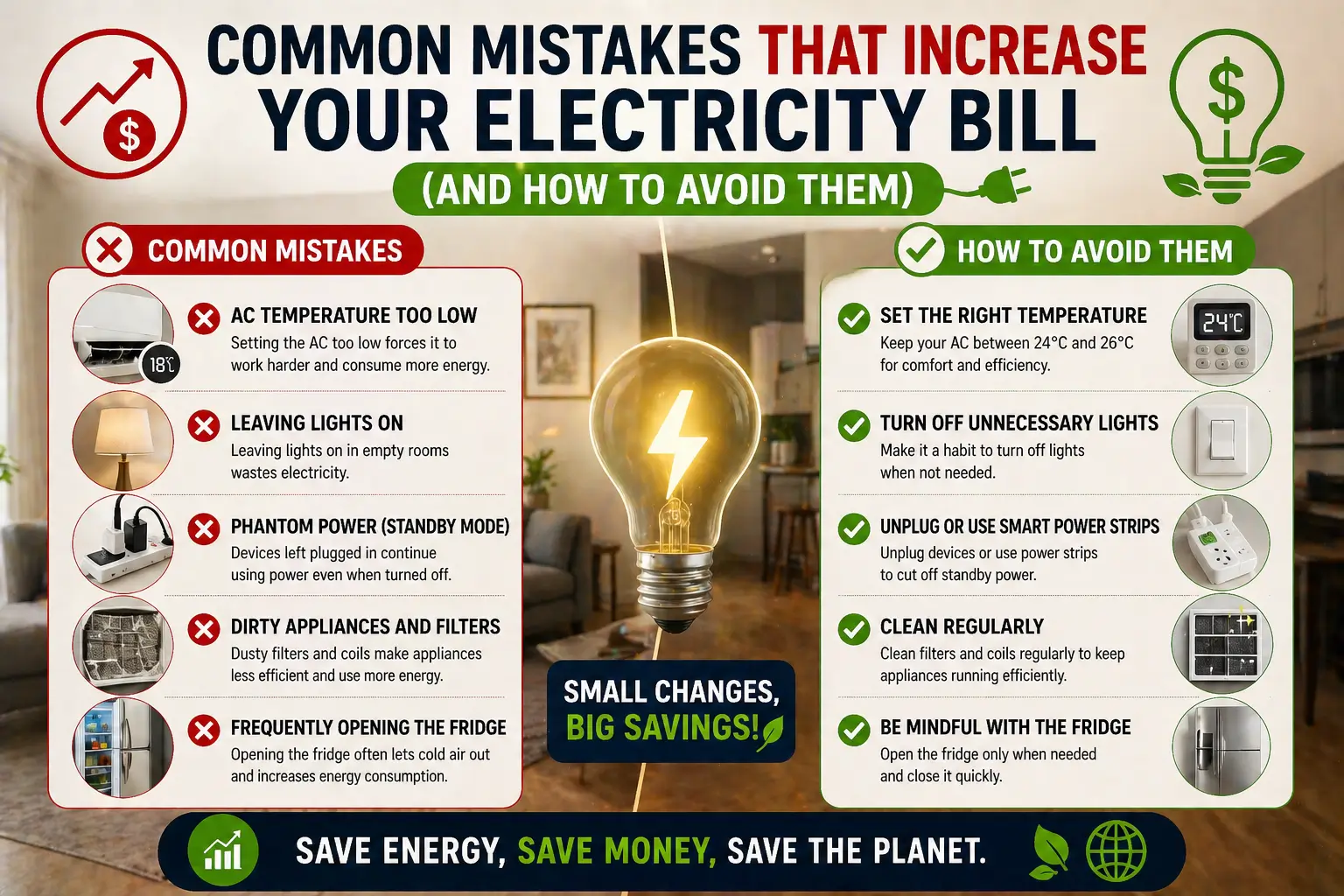
Setting Air Conditioning Too Low
Lower temperatures don’t cool a room faster—they just increase how long the system runs.
Many people set their air conditioner to 18°C or 19°C expecting quicker results. In reality, this only forces the unit to consume more electricity.
A more efficient range is usually between 23°C and 25°C.
In practice, this small adjustment can make a noticeable difference over time without reducing comfort.
Leaving Devices in Standby Mode
Another frequent mistake is assuming that “off” means zero consumption.
Devices like TVs, microwaves, and chargers still use electricity when plugged in.
Individually, the impact is small. But together, over days and weeks, it adds up.
A simple habit like unplugging devices or using a power strip can reduce this hidden consumption.
Poor Refrigerator Usage Habits
Refrigerators are often used inefficiently without people realizing it.
Common issues include:
- Opening the door too frequently
- Leaving it open while deciding what to take
- Overloading it or blocking airflow
For example, keeping the door open for longer than necessary allows warm air inside, forcing the fridge to work harder to restore the temperature.
This increases energy consumption without any real benefit.
Ignoring Natural Light and Ventilation
Artificial lighting and cooling are often used even when natural alternatives are available.
This happens when:
- Lights are on during the day
- Windows remain closed when outside air is cooler
- Air conditioning is used instead of natural airflow
In a small apartment, using natural light and ventilation can reduce unnecessary energy use significantly.
Practical Checklist to Avoid These Mistakes
If you want a simple way to improve your habits, start here:
- Use appliances only when necessary
- Run washing machines with full loads
- Set air conditioning to moderate temperatures
- Unplug devices not in use
- Avoid opening the refrigerator frequently
- Use natural light whenever possible
You don’t need to change everything at once. Focus on consistency.
Common Mistakes That Increase Electricity Bills
To summarize, here are the most common issues:
- Using appliances inefficiently
- Setting air conditioning too low
- Leaving devices in standby mode
- Poor refrigerator habits
- Ignoring natural light and airflow
These mistakes are easy to overlook but have a cumulative effect.
Signs You Are Wasting Electricity Without Noticing
Sometimes the problem isn’t obvious, but there are clear signs:
- Your bill remains high despite trying to save
- Appliances run longer than expected
- You rely heavily on air conditioning
- Lights and devices stay on without purpose
These patterns usually point to habits rather than equipment.
Real-Life Example: Habit vs Cost
Consider two similar apartments:
Apartment A:
- Uses appliances efficiently
- Controls air conditioning
- Reduces standby usage
Apartment B:
- Leaves devices plugged in
- Uses AC at very low temperatures
- Runs appliances without planning
Even with the same appliances, Apartment B will have a higher electricity bill.
The difference comes from daily behavior.
Before vs After: Small Changes, Clear Results
Before:
- Uncontrolled usage
- Frequent small mistakes
- No awareness of consumption
After:
- More intentional habits
- Reduced unnecessary usage
- Better control over energy
The results don’t appear overnight, but they become clear over time.
FAQ
Why is my electricity bill still high even when I try to save?
Because small daily habits may still be increasing consumption without you noticing.
Does lowering AC temperature cool faster?
No. It only increases energy use by making the system work longer.
Is standby power really a problem?
Yes. It adds up over time and contributes to unnecessary consumption.
What is the easiest mistake to fix?
Turning off unused lights and unplugging devices is one of the simplest and most effective changes.
Final Thoughts
Reducing your electricity bill isn’t about doing something extreme—it’s about avoiding small mistakes that happen every day.
In a small apartment, these habits have an even bigger impact because total consumption is easier to influence.
Once you start paying attention to how you use energy, improvements come naturally. And over time, those small corrections turn into real savings.