
You replace one light bulb and don’t think much about it. Then someone tells you: “You should switch everything to LED—it saves money.”
At first, it sounds like a small change. After all, how much difference can a few bulbs really make in a small apartment?
But when you start looking closer, lighting is one of those things that runs every single day. And even though each bulb uses a relatively small amount of energy, the combined effect over time can be more significant than it seems.
So the real question is: does switching to LED actually make a noticeable difference in your electricity bill?
Why LED Bulbs Use Less Electricity
LED bulbs are designed to produce light more efficiently than traditional incandescent or halogen bulbs.
Instead of generating heat and light at the same time, LEDs convert most of the energy directly into light. That’s the key difference.
In practice, this means:
- Less energy wasted as heat
- Lower electricity consumption for the same brightness
- Longer lifespan
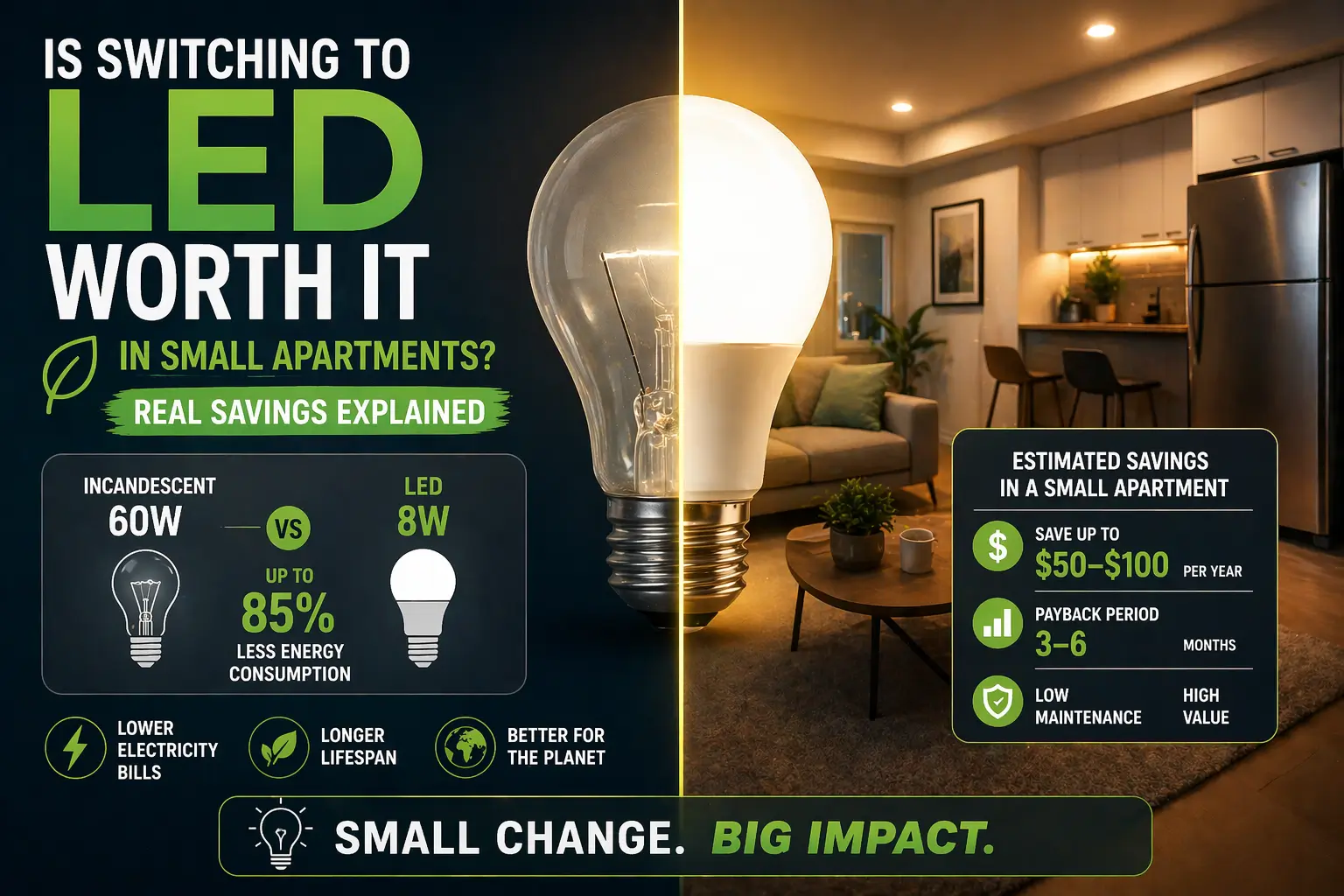
For example, a traditional bulb might use around 60 watts to light a room, while an LED can produce similar brightness using only 8 to 10 watts.
That difference becomes important when lights are used daily.
Small Apartment Reality: Why Lighting Still Matters
You might assume lighting isn’t a big deal in a small apartment. Fewer rooms, fewer bulbs, less consumption.
That’s partly true—but not the whole picture.
Lighting is used frequently:
- Early mornings
- Evenings
- During cloudy days
- In areas without natural light
Even in a small space, lights can stay on for several hours every day.
This is where efficiency matters. The longer something runs, the more important it is that it runs efficiently.
Real-Life Example: Before and After Switching to LED
Let’s imagine a small apartment with 6 light bulbs.
Before (traditional bulbs):
- Each bulb uses 60W
- Lights used 4–5 hours per day
After (LED bulbs):
- Each bulb uses around 9W
- Same usage time
The brightness stays similar, but the energy consumption drops significantly.
Over a month, the total difference may not feel dramatic at first glance. But over several months, the savings become easier to notice—especially when combined with other efficient habits.
When LED Makes the Biggest Difference
Not every bulb in your apartment has the same impact.
LED switching is most effective in:
- Rooms where lights stay on longer (living room, kitchen)
- Areas with no natural light
- Frequently used spaces
For example, replacing a bulb in a storage room that you rarely use won’t make much difference.
But replacing bulbs in areas used daily can gradually reduce your energy consumption.
Practical Checklist Before Switching to LED
If you’re thinking about making the change, here’s a simple checklist:
- Identify which lights are used the most
- Replace those first
- Choose the right brightness (lumens, not watts)
- Avoid mixing too many different light tones
- Check compatibility with fixtures
You don’t need to replace everything at once. Starting with the most-used areas already creates impact.
Common Mistakes That Increase Electricity Bills
Even after switching to LED, some habits can still increase energy usage:
- Leaving lights on in empty rooms
- Using more lights than necessary
- Choosing overly bright bulbs for small spaces
- Ignoring natural light during the day
LED bulbs reduce consumption, but they don’t eliminate waste.
For example, using multiple lights in a small room when one is enough still leads to unnecessary usage.
Signs You Are Wasting Electricity Without Noticing
Even with efficient lighting, there are signs of waste:
- Lights are left on during the day
- Rooms are fully lit even when partially used
- You rely on artificial light instead of natural light
- You forget to turn lights off when leaving
These patterns are common and easy to overlook.
The issue isn’t the bulb—it’s how it’s used.
LED vs Traditional Bulbs: A Simple Comparison
Here’s a straightforward comparison:
Traditional bulbs:
- Higher energy consumption
- Shorter lifespan
- More heat generated
LED bulbs:
- Lower energy consumption
- Longer lifespan
- More efficient light output
Over time, the efficiency difference becomes more noticeable than the initial cost.
FAQ
Do LED bulbs really save money?
Yes, especially when used daily. The lower energy consumption leads to gradual savings over time.
Is it worth replacing all bulbs at once?
Not necessary. Start with the most frequently used areas for better results.
Do LED bulbs last longer?
Yes. They typically last much longer than traditional bulbs, reducing replacement frequency.
Will switching to LED drastically reduce my bill?
Not alone. But combined with other habits, it contributes to overall savings.
Final Thoughts
Switching to LED in a small apartment is not about instant, dramatic savings. It’s about improving efficiency in something you use every day.
Lighting may seem like a small part of your electricity bill, but its consistent use makes it relevant over time.
If you focus on the areas where lights are used the most and combine that with better habits, the impact becomes more noticeable.
Start with a few bulbs, observe the difference, and build from there. Small changes like this are often the ones that last—and add up.