
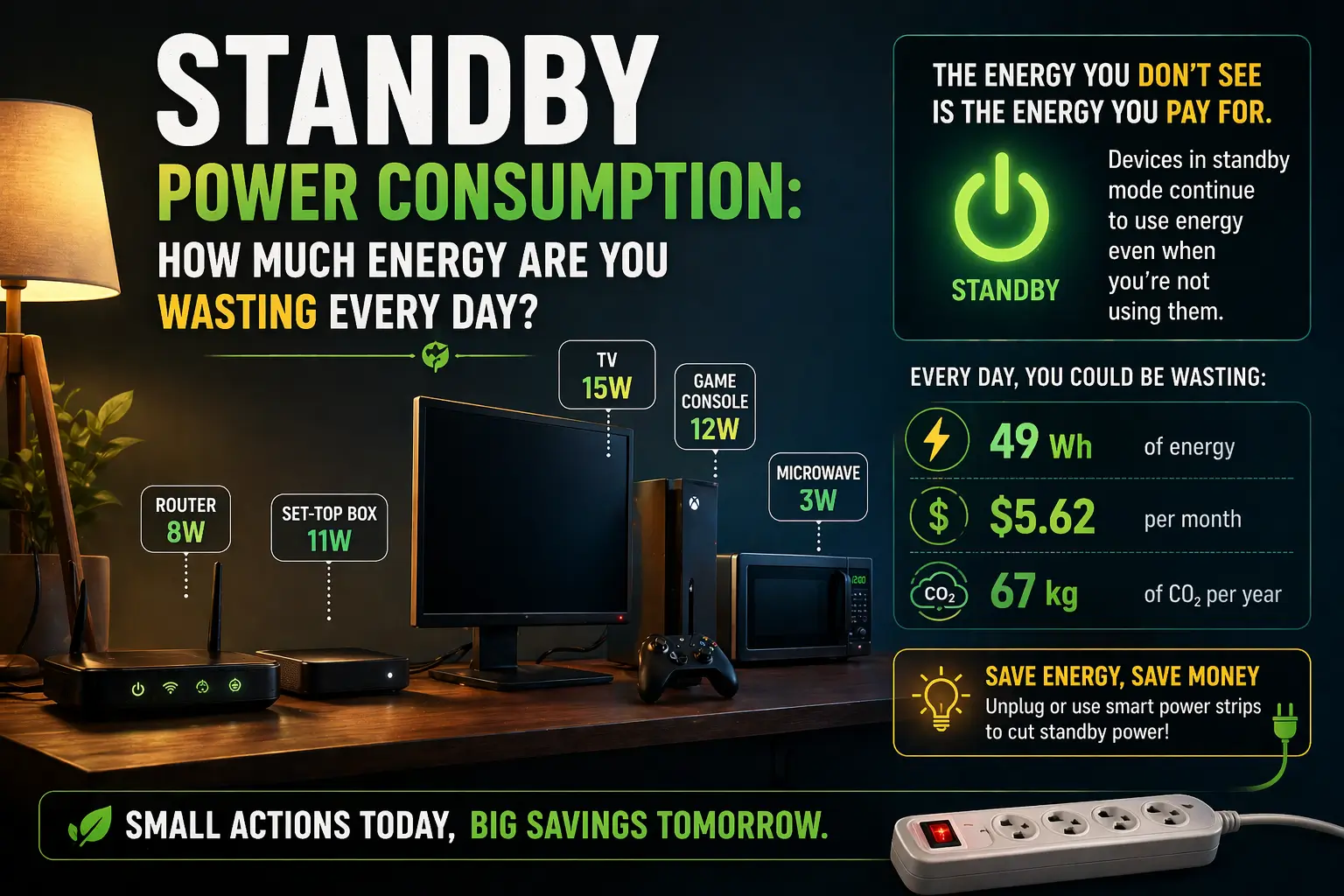
You turn off your TV before going to bed. The microwave display stays on. Your phone charger is still plugged in. Everything seems “off”—but your electricity meter says otherwise.
This is what’s called standby power consumption. It’s the energy used by devices even when you’re not actively using them. And in a small apartment, where every bit of consumption matters, this hidden usage can quietly increase your electricity bill.
Most people don’t notice it because it doesn’t come from a single appliance. It builds up little by little throughout the day.
What Is Standby Power and Why It Exists
Standby power is the electricity used by devices that are plugged in but not actively performing their main function.
This happens because many appliances are designed to stay partially active. For example:
- A TV remains ready to turn on instantly
- A microwave keeps its clock running
- A modem stays connected to the internet
In practice, these devices are never fully “off” unless you unplug them.
Manufacturers design them this way for convenience. But that convenience comes with a small, continuous energy cost.
How Small Energy Use Becomes a Bigger Problem
Individually, standby power seems insignificant. A single device might use only a small amount of electricity.
But here’s where it adds up.
Imagine you have:
- A TV
- A microwave
- A laptop charger
- A router
Each one uses a small amount of standby power. But together, over 24 hours a day and 30 days a month, the total becomes noticeable.
For example, if these devices together consume the equivalent of just a few extra kWh per month, that may not seem like much. But over a year, it becomes a meaningful portion of your electricity bill.
Real-Life Example: Small Apartment, Hidden Cost
Consider a small apartment where everything appears to be under control.
The resident turns off lights, uses appliances carefully, and avoids waste. Still, the electricity bill feels slightly higher than expected.
After checking, they realize:
- The TV is always plugged in
- The microwave display never turns off
- Chargers stay connected all day
- The internet router runs 24/7
None of these seem like major issues. But combined, they create a constant baseline of energy consumption.
This is what makes standby power tricky—it’s not obvious, but it’s always there.
Why Standby Power Matters More in Small Apartments
In larger homes, standby power may represent a smaller percentage of total energy use. But in small apartments, where overall consumption is lower, it becomes more noticeable.
For example:
- If your monthly usage is 300 kWh, standby might feel minor
- If your usage is 120 kWh, the same standby consumption becomes more significant
This means reducing standby power can have a more visible impact on your bill in smaller spaces.
Practical Checklist to Reduce Standby Power
If you want to reduce this hidden consumption, start with these steps:
- Unplug devices that are not used daily
- Use power strips with on/off switches
- Avoid leaving chargers plugged in all the time
- Turn off electronics completely when possible
- Group devices together for easier control
You don’t need to unplug everything. Focus on devices that stay unused for long periods.
Common Mistakes That Increase Electricity Bills
Standby power often increases due to simple habits:
- Leaving chargers plugged in even when not in use
- Keeping multiple devices connected all day
- Assuming “off” means zero consumption
- Forgetting rarely used electronics plugged in
These actions seem harmless because they don’t create immediate noticeable effects.
But over time, they create a constant energy drain.
Signs You Are Wasting Electricity Without Noticing
There are a few subtle signs that standby power may be affecting your bill:
- Your electricity usage stays high even with minimal appliance use
- You have many devices always plugged in
- You rarely unplug electronics
- Your bill doesn’t decrease even after reducing visible usage
These patterns suggest that hidden consumption is part of the problem.
Before vs After: A Simple Comparison
Let’s compare two scenarios:
Before:
- Devices always plugged in
- Chargers connected all day
- No control over standby usage
After:
- Devices unplugged when not needed
- Use of power strips
- Awareness of energy waste
The difference may not be dramatic in one day. But over weeks and months, it becomes noticeable.
This is one of those changes where consistency matters more than intensity.
FAQ
Does standby power really make a difference?
Yes. While each device uses a small amount, the combined effect over time can increase your electricity bill.
Should I unplug everything?
Not necessarily. Focus on devices you don’t use often or those that stay idle for long periods.
Are power strips worth it?
Yes. They make it easier to turn off multiple devices at once, reducing standby consumption.
What device uses the most standby power?
Devices like TVs, gaming consoles, and internet routers tend to consume more than smaller electronics.
Final Thoughts
Standby power is easy to ignore because it doesn’t feel like real usage. But in reality, it’s one of the most consistent forms of energy consumption in any home.
In a small apartment, where every kWh matters, reducing this hidden usage can help bring your electricity bill down over time.
You don’t need drastic changes. Just a bit of awareness and a few simple adjustments can make a difference.
Start by looking around your apartment. If something is plugged in but not being used, there’s a good chance it’s still consuming energy.